
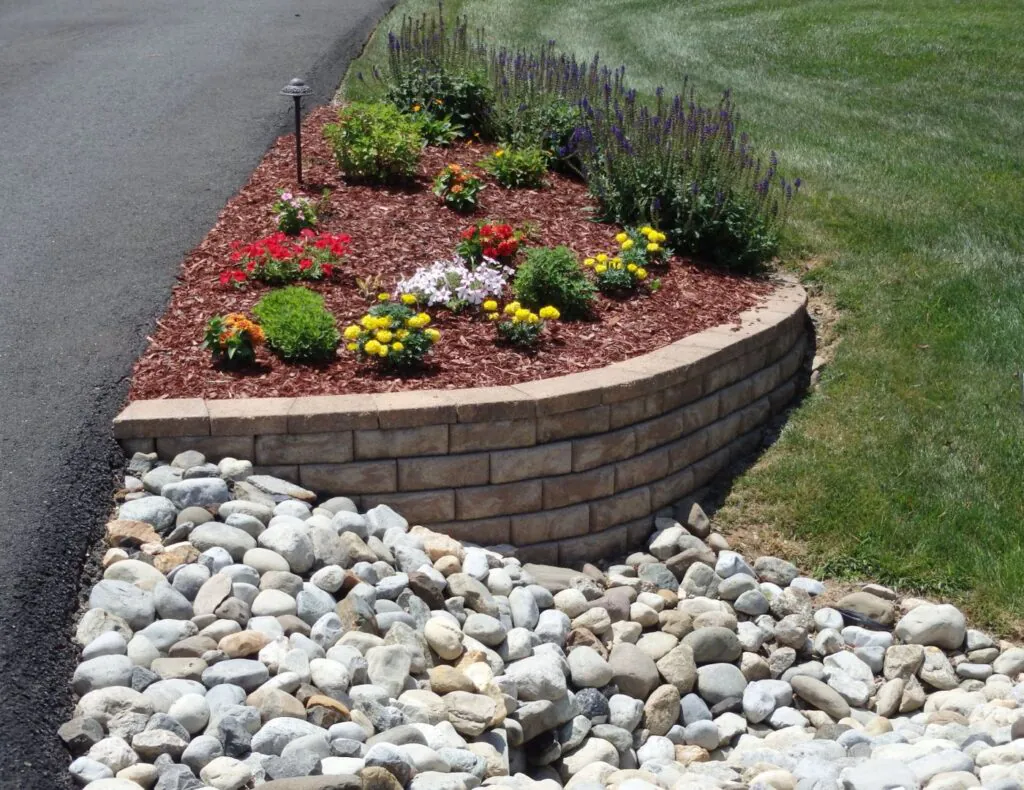
For most flower beds, the best mulch is a double shredded hardwood mulch spread 2 to 3 inches deep. It holds moisture, blocks weeds, breaks down slowly into the soil, and looks natural around perennials, annuals and shrubs.
If you want a bolder look, dyed black, brown or red mulch gives you the same protection with a color that lasts through the season. If your beds need feeding more than covering, leaf mulch compost adds organic matter as it breaks down.
Below we compare each option, show you how much to order, and explain when to mulch in Maryland and Northern Virginia. We deliver every mulch on this page for free, straight to your driveway.
Flower Bed Mulch Compared
| Mulch | Look | Best for | Good to know |
|---|---|---|---|
| Double Shredded Hardwood | Natural brown (undyed), fades to gray over time | Most flower beds, shrub beds, perennials | Our best value and the all-around pick |
| Black Mulch | Deep black | Bright flowers, modern landscapes | Makes colors pop; holds its color through the season |
| Brown Mulch | Rich, even brown | Traditional beds, around brick and stone | A classic look that stays darker than natural mulch |
| Red Mulch | Red | Beds next to green lawns, white or gray houses | Strong contrast; pick it on purpose |
| Leaf Mulch Compost | Dark and fine | Annuals, vegetable beds, beds with poor soil | Feeds the soil as it breaks down; top up more often |
Which Mulch Should You Choose for Your Flower Beds?
Double shredded hardwood: the best all-around flower bed mulch
Double shredded hardwood mulch is ground twice, so the pieces are small and knit together into a mat. That mat stays put in rain, keeps soil cool in summer, and smothers weed seeds before they sprout. It is undyed, so it starts a natural brown and weathers to gray. It breaks down slowly and adds organic matter to your soil each year. If you are not sure which mulch to buy, start here.
Dyed mulch: black, brown or red
Dyed mulch gives beds a clean, finished look and keeps its color much longer than natural mulch. Black mulch makes bright flowers like petunias, marigolds and hydrangeas stand out. Brown mulch is the safe choice that matches almost any house. Red mulch is a statement color that works best against green lawns or light-colored siding. Still deciding? Read our black vs. brown mulch guide.
Leaf mulch compost: when your beds need feeding
Leaf mulch compost is finer and richer than wood mulch. It is the best choice for annual beds and vegetable gardens, or for beds where the soil is hard clay. It breaks down faster, so plan to top it up every season.
What not to use in flower beds
- Wood chips. They are made for paths, trails and dog runs. In flower beds the coarse pieces look rough and can tie up nitrogen in the top layer of soil.
- Mulch piled against stems and trunks. “Volcano” mulching holds moisture against bark and invites rot and pests. Keep mulch a few inches away from stems.
- More than 3 inches at once. Too much mulch smothers roots and keeps water from reaching the soil.
How Much Mulch Do You Need for a Flower Bed?
Measure your beds in square feet (length × width), then use this formula:
Cubic yards = square feet × depth in inches ÷ 324
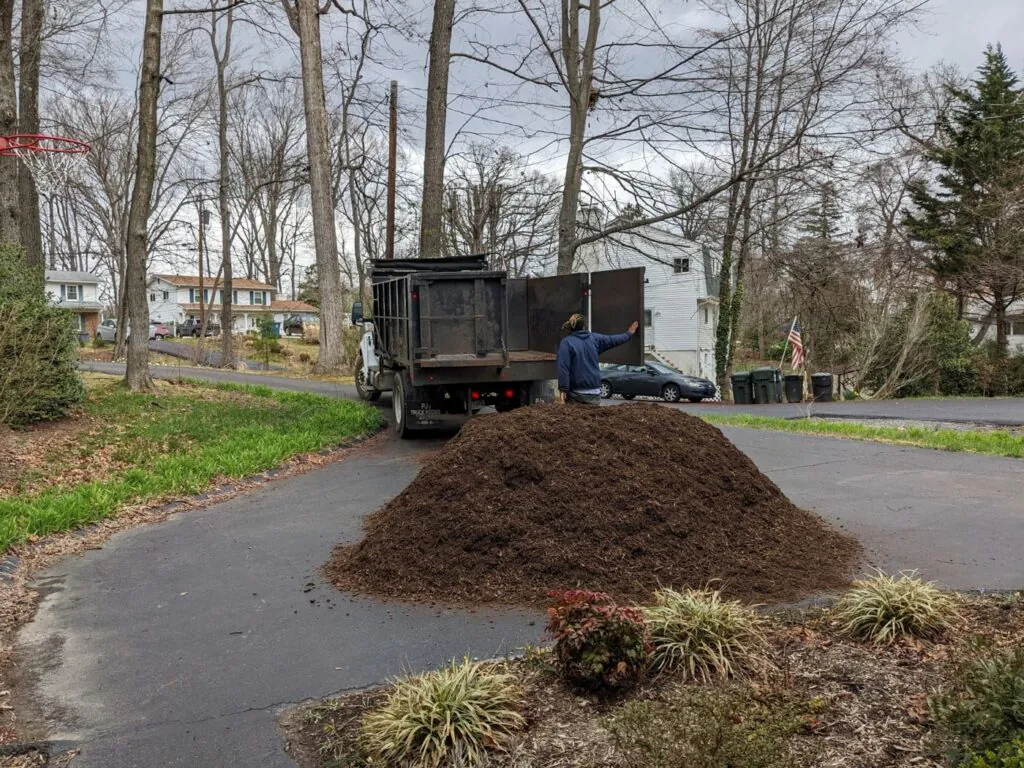
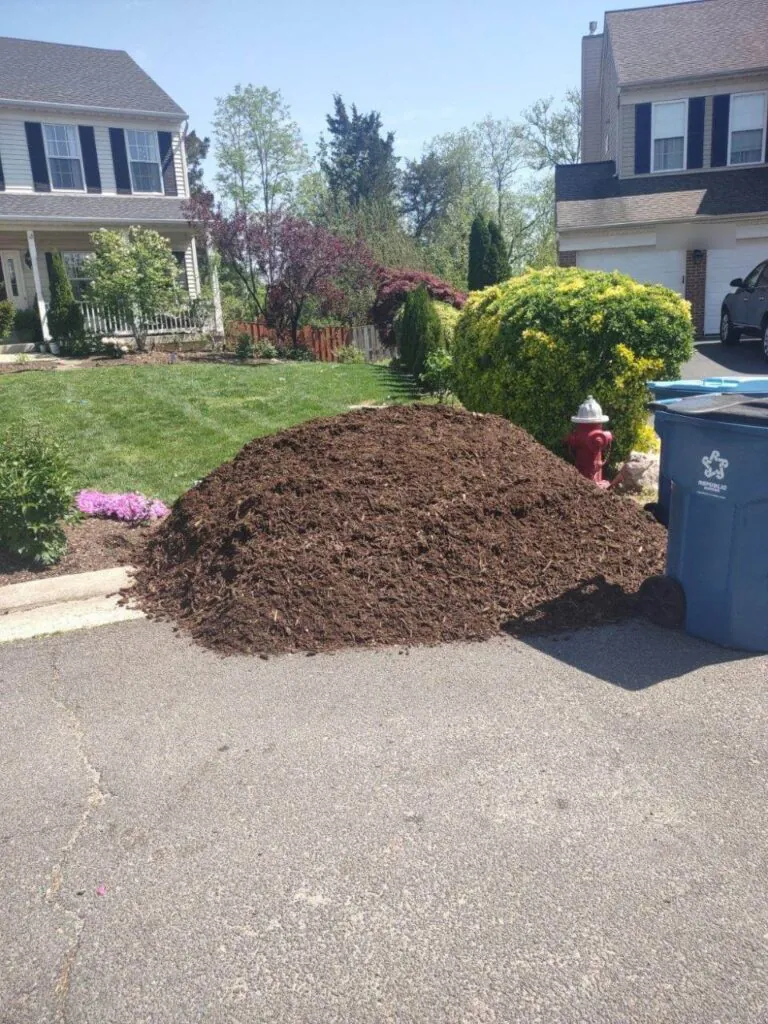
One cubic yard covers about 162 square feet at 2 inches deep, or about 108 square feet at 3 inches. A typical front bed of 10 by 30 feet (300 square feet) needs about 3 cubic yards at 3 inches. Our mulch calculator does the math for you. Mulch deliveries start at 5 cubic yards, so measure all your beds and order them together.
How to Mulch a Flower Bed
- Weed first. Pull weeds by the root so they don’t push up through the new mulch.
- Edge the bed. A clean edge 2 to 3 inches deep keeps mulch in and grass out.
- Water the soil if it is dry, so moisture is locked in under the mulch.
- Spread 2 to 3 inches evenly. Over last year’s mulch, 1 to 2 inches is usually enough.
- Pull it back from stems and trunks by a few inches.
- Water lightly to settle it in place.
When to Mulch Flower Beds in Maryland and Northern Virginia
The best time is mid-spring, from about mid-April through May, once the soil has warmed and your spring weeding is done. Mulching too early keeps cold soil cold and slows your plants.
A second, lighter layer in fall (late October through November) protects roots through winter freezes and gives you a head start on spring. Most beds only need a full refresh once a year, with a 1 to 2 inch top-up where the old mulch has thinned.
Flower Bed Mulch FAQ
What is the best mulch for flower beds?
For most beds, double shredded hardwood mulch. It holds moisture, blocks weeds, stays in place and feeds the soil as it breaks down.
Is black or brown mulch better for flowers?
Both protect plants the same way. Black makes bright blooms stand out; brown gives a softer, traditional look.
How deep should mulch be in a flower bed?
2 to 3 inches for a new bed, and 1 to 2 inches when topping up last year’s mulch.
Should I remove old mulch before adding new?
Usually not. Old mulch breaks down into the soil. Rake it loose, then add a thinner fresh layer on top.
Does mulch attract termites?
Any wood mulch can shelter insects. Keep mulch a few inches away from your foundation and siding.
Get Bulk Mulch Delivered Free
Mulch & Stone delivers bulk mulch for free to homes and businesses in Anne Arundel, Prince George’s, Howard and Montgomery counties in Maryland, and Fairfax, Loudoun, Prince William and Arlington counties in Virginia, plus part of Fauquier County. Order 5 cubic yards or more online, pick your delivery date, and we drop it on your driveway. See our full delivery area.
Shop bulk mulch with free delivery →
Getting your garden ready too? Read our guide to the best mulch for garden prep.